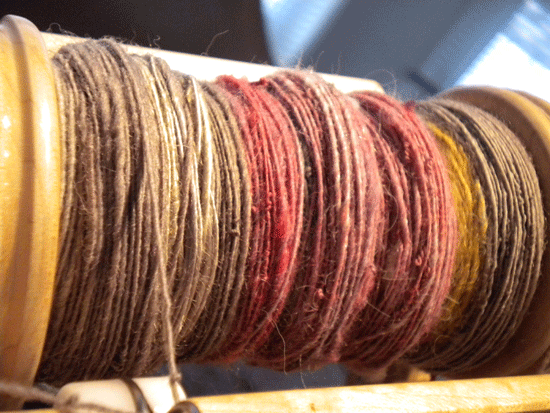
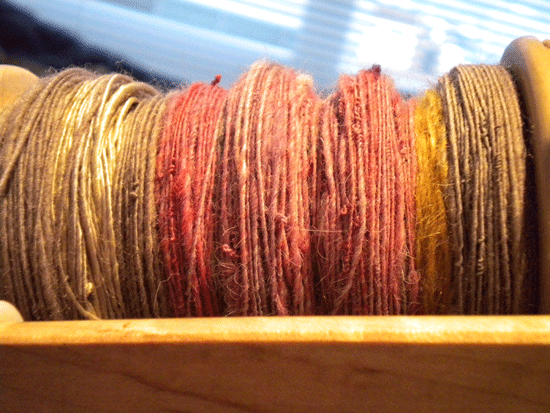
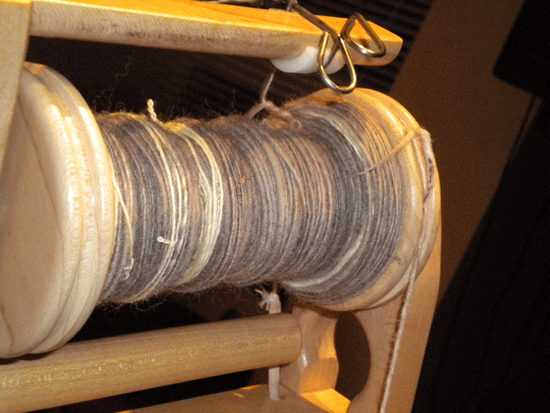
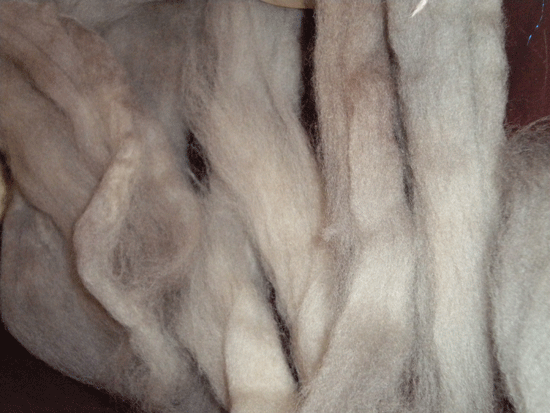
Handspun yarn can be tricky to measure for gauge- especially for handspun yarns that are thick and thin, have long sections that are thinner interspersed with thick sections, or yarns that have bobbles or add ins. If you are spinning many bobbins of yarn for or buying enough handspun for a large project, it is important to know if the gauge of the yarn differs.
What is Gauge- Why You Should Knit a Gauge Swatch
Gauge is the number of stitches and rows per every inch. It is important because it determines if your project will look like the pattern sample or be too big or too small.
Tools to Measure Gauge
You can use a tape measure or ruler to measure gauge, but a knitting gauge
 is a handy tool that usually has a ruler and knitting needle sizes- great for when they sizes rub off of your knitting needles.

A basic knitting needle gauge can be had for just a couple dollars at most yarn and craft stores, and are made of easily bent metal (but I have ones that are quite old and still work fine).
Plastic, especially clear plastic gauges are useful as well, and tend to cost about the same as metal gauges.


Fancier and small
 ones also exist, but are often harder to use, but can be quite cute, as in the shape of sheep.
Very small ones often only have 2 inch measurement tools
, which is fine if you need the tool packed in to a kit carried in a bag and space is limited, but I prefer the 4-6 inch measurements. How to Count Stitches for Stitches/Inch
Using a ruler or stitch gauge, measure across at least 2 inches of your knit swatch, and divide by the number of inches. Measure in several places to be sure you have the correct measurement. For example, if you have 5 stitches over 2 inches you have 2.5 stitches per inch.
How to Count Rows to Get Row Gauge
Same as above, but measure the number of rows- especially easy in st st, just measure the “v” shape!
Here is how to measure handmade yarns that have different thicknesses:
Single/1 ply handspun yarn or yarns that are smooth or thick and thin:
Thick and thin yarn is yarn that alternates between thick and thin sections quite frequently- usually every couple inches. They are often a single (not plied), but yarns that vary in thickness are also found in multi plied yarns- part of the beauty of handspun yarn.
To measure the gauge- measure as you would for regular yarn, being sure to measure in several places to ensure the most accurate gauge. I average if I have multiple gauges.
Handspun yarn with long sections of different weights of yarn:
These yarns might be spun very fine with a large coil section, or may just be different thicknesses of a single ply yarn. To show off the effect of the different thicknesses, knit the yarn on large needles. The thinner yarn will look lacey.
Measure gauge by measuring both sections of yarn. Depending on how long the stripes of the thicker yarn is, you often use the gauge for the smaller yarn, slightly stretching the stitches as you measure. If there are more thick sections with only occasional thin, use the measurement for the thicker sections.
Keep in mind that if you are knitting a garment or large object in a yarn that varies thickness frequently that the different weights of yarn will pull in different amounts, so you may end up with a lumpy fabric or garment that pulls in at the thinner sections.- not an issue for a scarf, but this can be annoying for a sweater, gloves, etc.
Handspun yarn with thinner sections with occasional very thick sections (such as yarn with occasional coil sections spun in):
Measure this yarn using the thinner section. It is best to knit this yarn slightly loose so that the thick sections stand out and are not too hard to knit.
Handspun yarn with bobbles or large items added in occasionally:
Knit yarn with bobbles or add in’s as you would a handspun yarn that didn’t have them- knit slightly loose, so the fabric has plenty of drape and movement. Measure gauge based on the yarn sections without bobbles.
Handspun yarns for large projects:
Measure as you would a regular yarn, or as the above yarns.
When buying or spinning a large amount of handspun yarn for large projects, there is often some variation between skeins, both in color/dye and in thickness- especially for 1 or 2 ply yarns. I always tell my students to knit alternating rows (I do 2-4 rows in one color then switch, carrying the color up the side) to make sure than any difference in weight or color doesn’t show up as a sudden stripe in the finished knit item.
Is there a difference in measuring gauge for patterns or textured stiches for handspun yarn?
Generally, measuring the gauge of a different stitch pattern is the same for handspun yarn as it is for regular yarn- just make sure you are knitting your gauge swatch in the same stitch pattern called for in the pattern you are using. For some stitch patterns, like ribbing the swatch you are knitting is often stretched slightly before measuring- this is because most ribbed projects are designed to be stretched slightly when worn- for example, a ribbed hat, which stays in place on the head because of the ribbing. (example: knitting the ribbing too tight or too loose would make the ribbing in a project like the Circle Vest Knitting Pattern not fit properly)
Handspun yarns can really make a simple pattern like ribbing or seed stitch pop- the slight variations in color and thickness make the fabric much more interesting than a plain solid colored yarn.
Knit a gauge swatch in handspun yarn without wasting yarn
Before you start a project, make sure you knit up a gauge swatch for your handspun yarn. This is important not only so you can get the gauge of your yarn, but also so that you can get a feel for how the yarn will drape, since handspun yarn often has a very different “hand” compared to conventional yarns.
Make sure you knit the gauge swatch at least 4x4 inches, and measure in several places over several inches- if you measure just one inch you risk being off by ¼ or ½ of a stitch, which can add up to inches around for projects like sweaters or blankets.
Don’t break the yarn after you knit the gauge swatch- keep the yarn attached, and block the swatch with the yarn ball still attached. After you are done measuring, pull the swatch out and cast on to start your project.
If you know you have enough yarn to not need to unravel the gauge swatch, go ahead and break the yarn and block the gauge swatch as you would normally, but try and break the yarn in a way that it is easy to splice the yarn back together if it turns out later on that you need the yarn.
When gauge doesn’t matter:
Gauge often does not matter when you are knitting simple scarves, to down hats, blankets knit from the inside to the outside edges, or for other projects where size is not important. In these cases, simply choose knitting needles that produce a pleasing fabric- often people will use large (17+) needles to knit bulky handspun yarns in to a scarf, since it knits up quickly with very little effort or time and helps stretch small amounts of handspun yarn. For these projects, I rarely take the time to measure my gauge, and simply start knitting a small swatch to see how I like the fabric.
When you have too many stitches every inch in your gauge swatch:
If you have too many stitches per inch in your swatch it means you need to use a large needle size. Larger needles means you will get fewer stitches an inch.
When you have too few stitches in your gauge swatch:
If you don’t have enough stitches in you gauge swatch it means you need to switch to smaller needles, which will give you more stitches for every inch.
Measuring Garter Stitch Row Gauge for Handspun Yarn
People think garter stitch is hard to measure because the bumps tend to blend together- not so! Just make sure you are counting the SAME side of the garter bumps- if you can’t don’t this, try knitting one row in a different color- the bumps on one side will show up more easily. (example: Measuring gauge for the Garters Hat ensures that the hat won't be too long.)
Measuring Lace Patterns for Handspun Yarn Gauge
Lace patterns are almost always used as the measure for gauge if your project includes lace. It is important when measuring lace to be sure you are measuring the lace gauge AFTER blocking- and you must block in the same way you will block your finished project. Otherwise, your project will grow alarmingly wide and long when the lace is blocked! (example:
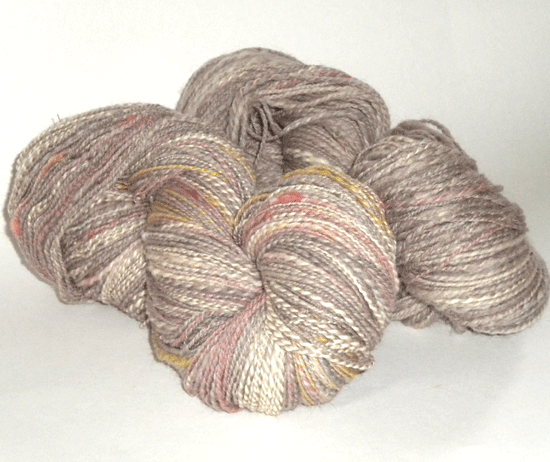
Naturally dyed handspun yarns and swatches for this tutorial are all from Midnightsky Fibers http://MidnightskyFibers.com
You might also like:


 great for figuring out how much handspun yarn you need for projects like hats and sweaters.
The Knitter's Handy Book of Patterns: Basic Designs in Multiple Sizes & Gauges (Interweave)

The Knitters Handy Book Of Sweater Patterns

Two of my favorite books for knitting pattern basics- different gauges are given for each size.
Enjoy!
Jenn
Midnightsky Fibers


 , though I modified the twill pattern I was using a bit to make it more interesting.